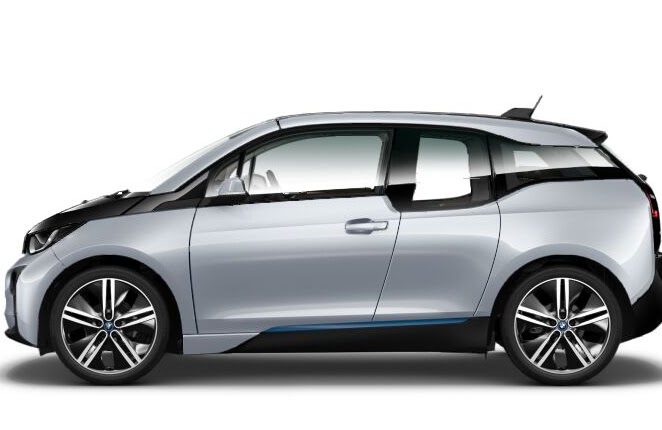
Showing posts with label i3. Show all posts

Saturday, May 9, 2015

BMW i3 Year One Celebration


The BMW i3 Year One Celebration in underway across America with various dealerships hosting events, and local owners getting together to celebrate the one year anniversary of the launch of the i3 in the US.

JMK BMW in Springfield, NJ had a good showing
The idea for the Anniversary Event began with a conversation back in February between a few i3 owners in the BMW i3 Facebook group. Roman Vazquez actually was the one who first thought of having an official nationwide i3 anniversary celebration. At first the thought was that we'd pick a day and coordinate local meets for i3 owners to get together. We've done similar meets like this before, where we get together in a parking lot somewhere, but Roman thought meeting at a dealership might be interesting. The idea quickly expanded to, "How about we try to get dealerships across the country to host an event?"
Crevier BMW in Southern California had the largest turnout with over 200 people in attendance! Photo credit to Harry Lin

BMW supplied pins
We knew we couldn't coordinate something that large ourselves, so I reached out to BMW i Marketing Manager, Joan Bowen, and asked if BMW would be willing to help us get this off the ground. She loved the idea and simply asked, "What can we do to help?" So BMW created the event logo, contacted their dealer network informing them of the event (of which participation was optional) and created some swag (T-shirts, pins & stickers) which they would send to participating dealers to give out during the day.

Some dealerships took it one step further and gave away prizes. Two dealerships that I'm aware of that really put extra effort into the event were JMK BMW in New Jersey and Crevier BMW in Southern California. Both dealerships raffled off a free JuiceBox Pro 40 EVSE (Crevier also raffled off other prizes including a JLong charging extension cable), offered catering for the attendees and did their best to make the day special for the i3 owners. 


The official anniversary event lasts for the remainder of the month of May, but the majority of events happened on May 9th, which was the day we originally planned, before BMW joined in to help us get more dealerships involved. It was really nice to get together with other i3 owners, swap stories and EVangelize a bit. There's already talk of formally making this an annual event and I think that would be a great idea. We put this year's gatherings together on short notice and without many of the dealerships participating. It was a lot of fun and I think we're on to something here, so watch out for next May!
No local participating dealership? No problem! Just meet somewhere on the street or in a parking lot like these i3 owners in Virginia did. Photo courtesy of  Reony Tonneyck

Photo: George Betek
One thing I'm particularly happy to see, is BMW's willingness to participate in events like these. They didn't hesitate to say they thought it was a great idea and then asked how they could help. It's important that the manufacturers continue to offer strong support for their plug-in offerings. It's not enough just to make the cars. A successful plug-in vehicle program needs the support of the manufacturer with a healthy marketing budget, and continues with community outreach, like these kinds of events offer. The EV market in still in its infancy, and if a manufacturer is really serious about being a market leader in this space, then these kinds of events are a great way to build consumer confidence in the brand. 
Ariel view of Crevier during the celebration. Photo courtesy of Roman Vasquez
A special thanks goes out to Roman Vazquez, Heather Somaini, Kris Kluzak, George Betak, Shawn Wooten, Wilfred Fojas, Manny Antunes, Dave Avery, Peder Norby, John Higham, David Vottero and Brandon Watson. All of whom put a lot of time and effort behind the scenes to make the i3's first birthday party a memorable event.

What kind of a party would it be without a parade? Photo courtesy of Jamie Dow
BMW made these T-Shirts for the event and provided them to the participating dealer

Thursday, January 22, 2015

BMW Partners With Volkswagen & ChargePoint. Announces Beginning of Large Scale CCS Fast Charge Rollout in US


Today at the DC Auto Show, BMW announced they have partnered with Volkswagen and ChargePoint to begin what will be the largest roll out of CCS Fast Charge stations in the US. This first phase will consist of the installation of roughly 100 CCS Fast Charge stations, split between the East and West Coasts. 

On the East coast, there will be locations approximately every 50 miles between Washington DC and Boston, and on the West coast the new "CCS Highway" will span from San Diego, CA all the way to Portland OR. All of these locations will feature 50kW dual-head Fast Charge stations, including CHAdeMO charging capabilities as well as CCS. In addition, these locations will have multiple Level 2 ChargePoint EVSE's, allowing the user to "top off" once the vehicle reaches 80% state of charge from the DC fast charger. 

In addition to the "CCS Highway" locations, BMW is also going to install a network of their 24kW DC Fast Chargers at secondary locations which are somewhat off of the main arteries. 

I spoke with BMW infrastructure manager Rob Healey today and he wanted to stress how this announcement signifies only the beginning of the commitment that BMW and their partners have to proliferate the deployment of DC Fast charge infrastructure. He pointed to the fact that the decision to include CHAdeMO on all their 50kW locations on the East & West coast deployment indicates their commitment to the success of overall e-mobility, not just their plug-in offerings. Healey used the phrase that "a rising tide lifts all boats" and in this case I believe he's absolutely correct. 

BMW and their partners are still identifying locations and are working with public and private entities to secure locations that are a maximum of 50 miles apart. There isn't a set time frame on completion of this first phase but the installations have begun on the West Coast and will soon begin on the East. BMW has already installed three 24kW DC stations and four dual-head Level 2 charging stations at their North American Headquarters in Woodcliff Lake, NJ. I was even invited there to test them out with my i3 this week, which I did. All of these stations will be open to the public 24/7 and they already appear on the ChargePoint map. 


I believe this is a great first step for BMW and their partners with regards to DC fast charge, but it's only the first step. There will also be attention paid to the other areas of the country that aren't included in this announcement. It's a big country, and areas like Atlanta which have become EV hot spots aren't going to be ignored, but these two corridors were considered the most important ones to begin with. I also believe we're going to see even more collaboration between the OEMs. It's no secret BMW and Tesla have had discussions in the past, and in my opinion, installing CHAdeMO on all of their locations on the CCS Highway is extending a huge olive branch to Nissan. How great would it be if Nissan then turned around and said they will do the same thing now? This little detail could end up being the biggest thing to come out of the whole announcement...


Full Press release:

Washington, D.C., January 22, 2015� At the 2015 Washington Auto Show, two of the top automakers, BMW of North America and Volkswagen of America, together with ChargePoint, the largest electric vehicle charging network, announced an initiative to create express charging corridors along heavily-traveled routes on the East and West Coasts. Designed to increase the number of fast charging locations, the initiative will help meet the large and growing demand for convenient, publicly available electric vehicle fast chargers, including direct current (DC) Fast charging locations, and support the adoption of electric vehicles in the United States. In the initial phase, the aim is to install nearly 100 DC Fast charging ports across both coasts, with plans to expand the program to increase access to fast charging across the country. These newly installed DC Fast chargers will be added to the growing ChargePoint network of more than 20,000 charging spots in North America.

With more than 280,000 electric vehicles sold in the United States, EV owners need more charging flexibility while on the go. The express charging corridors will provide electric vehicle drivers access to DC Fast chargers along the most heavily populated and highly-trafficked regions on Interstate 95 on the east coast, from Boston to Washington, D.C., and on the west coast covering and connecting the metropolitan areas of Portland, San Francisco, Los Angeles, and San Diego. The installations will occur both within and between relevant metro areas, strategically-spaced at a maximum of 50 miles apart, making it even easier to take long road trips in an EV.

�A robust network of conveniently located DC Fast charging stations will go a long way toward increasing electric vehicle adoption and making electric vehicle ownership even more enjoyable,� said Robert Healey, Head of EV Infrastructure at BMW of North America. �The express charging corridors are another important step in the development of the U.S. e-mobility infrastructure that makes longer distance travel a real option for consumers, particularly along the most heavily trafficked portions of both coasts�making the BMW i3 and other electric vehicles even more appealing.�

�Volkswagen believes in a holistic approach to e-mobility in order to create a seamless experience for the consumer,� said J�rg Sommer, vice president, product marketing and strategy, Volkswagen of America. �The investment in the express charging corridor will provide e-Golf and other electric vehicle owners with the added support to travel their day-to-day and popular long distance routes.�

Each fast charging location along the express charging corridors is expected to include up to two 50 kW DC Fast chargers, or 24 kW DC Combo Fast chargers with the SAE Combo connector, used in both BMW and Volkswagen electric vehicles as well as many other electric vehicles that incorporate a DC Fast Charging capability. When charging at a 50 kW station, both the BMW i3 and the Volkswagen e-Golf can charge up to 80 percent in 20 minutes. Both vehicles can charge up to 80 percent in 30 minutes at a 24 kW station. Locations will also include Level 2 chargers, currently the most commonly available public charging stations, which are compatible with all electric vehicles. Level 2 stations can dispense up to 25 miles of range per hour of charging, providing a full charge for the BMW i3 and the VW e-Golf within 3.5 to 4 hours.

The DC Fast charging stations will be part of the ChargePoint network and can be easily accessed with a ChargePoint or ChargeNow card or with the ChargePoint mobile app.

�Our goal at ChargePoint is to get everyone behind the wheel of an EV and provide EV charging everywhere they go,� said Pasquale Romano, ChargePoint CEO. �With strategically-placed stations where drivers need them, these express charging corridors will give EV drivers the freedom to go farther and have an EV as their only car without limitation.�

Installations have already begun on the west coast, with the first location in San Diego County. There is a target of nearly 100 DC Fast charging ports in the first phase, available by the end of 2015. DC Fast chargers along the express charging corridors are expected to be installed in convenient locations such restaurants, shopping centers, rest stops, and more. ChargePoint will leverage its existing customer base and knowledge on usage to pick strategic locations either where drivers currently charge, or to fill in spaces where there is currently a lack of infrastructure.

With the investment, BMW, Volkswagen and ChargePoint are providing drivers with the ability and confidence to enjoy longer distance driving and recharge their electric vehicles quickly, ultimately leading to greater electric vehicle adoption. 


BMW Group In America
BMW of North America, LLC has been present in the United States since 1975.  Rolls-Royce Motor Cars NA, LLC began distributing vehicles in 2003.  The BMW Group in the United States has grown to include marketing, sales, and financial service organizations for the BMW brand of motor vehicles, including motorcycles, the MINI brand, and the Rolls-Royce brand of Motor Cars; DesignworksUSA, a strategic design consultancy in California; a technology office in Silicon Valley and various other operations throughout the country.  BMW Manufacturing Co., LLC in South Carolina is part of BMW Group�s global manufacturing network and is the exclusive manufacturing plant for all X5 and X3 Sports Activity Vehicles and X6 and X4 Sports Activity Coupes.  The BMW Group sales organization is represented in the U.S. through networks of 339 BMW passenger car and BMW Sports Activity Vehicle centers, 147 BMW motorcycle retailers, 122 MINI passenger car dealers, and 35 Rolls-Royce Motor Car dealers.  BMW (US) Holding Corp., the BMW Group�s sales headquarters for North America, is located in Woodcliff Lake, New Jersey.

About Volkswagen of America, Inc.
Founded in 1955, Volkswagen of America, Inc., an operating unit of Volkswagen Group of America, Inc. (VWoA) is headquartered in Herndon, Virginia. It is a subsidiary of Volkswagen AG, headquartered in Wolfsburg, Germany. VWoA�s operations in the United States include research and development, parts and vehicle processing, parts distribution centers, sales, marketing and service offices, financial service centers, and its state-of-the-art manufacturing facility in Chattanooga, Tennessee. The Volkswagen Group is one of the world's largest producers of passenger cars and Europe's largest automaker. VWoA sells the Beetle, Beetle Convertible, CC, Eos, e-Golf, Golf, Golf GTI, Jetta, Jetta SportWagen, Passat, Tiguan, and Touareg vehicles through approximately 651 independent U.S. dealers.

About ChargePoint
ChargePoint operates the world�s largest electric vehicle (EV) charging network, with more than 20,000 spots to plug in and charge. We are transforming the transportation industry by providing the charging stations, mobile apps, analytics and the charging network that allow property owners and drivers to benefit from EV charging. We are also transforming the energy industry by providing intelligent solutions to help people and businesses shift away from fossil fuels and use electricity more efficiently. Our mission is to get all drivers behind the wheel of an EV and provide them a place to charge whether at home, at work, around town or out-of-town. 

Over 165,000,000 gas-free miles have been driven on our network, and our drivers have collectively avoided more than 6.9 million gallons of gasoline and 51 million pounds of CO2 emissions. Real-time network information is available through the ChargePoint app and in many top-selling EVs.

Thursday, October 16, 2014

BMW Working on a REx Upgrade to Increase Performance

The 650cc twin cylinder engine used in the i3 is borrowed from BMW's Motorrad division and modified for the REx

From the first word that the North American version of the i3 REx would have restrictions not found on its European counterpart, i3 enthusiasts and customers in the US and Canada have wondered how well it would work under strenuous driving conditions.

In fact, it is by far the topic I now get the most correspondence over. I have probably received over 100 emails through this blog from followers that want to know how well the range extender works and how capable it is. People want to know things like what speed the car can maintain in charge sustaining mode and for how many miles can the car maintain highway speeds on a certain percentage upgrade, and so on. I even have had people ask me if I could conduct specific tests with my car to confirm it can do what they need it to. The reason being is the 34hp REx engine can only deliver about 25kWs (although some reports say BMW upped it to 28kWs) of power. That is plenty of power for nearly all normal driving needs, but not enough for continued high speed or long upgrade driving. The problem then arises if you continue to consume more energy than the REx can deliver.
My i3 when the REx turns on. Notice the tiny little bar of electric reserve to the left of the triangle. That indicates the 6.5% SOC position where the REx initiates and tries to maintain. There isn't a lot of buffer there for strenuous driving conditions.

The root of the problem reverts back to BMW's desire to have the i3 REx certified a BEVx vehicle by the California Air Resource Board. This allows BMW to get the most ZEV credits per vehicle, and also allows the i3 REx to qualify for other perks, like sales tax exemption in New Jersey and Washington State. It also allows the owner to get the full $2,500 California CVRP rebate, unlike all other PHEVs which only get $1,500. However this came with a cost, one that everybody with an i3 REx from every state has to endure. BMW had to restrict the REx use to comply with CARB's BEVx classification. The European i3 REx can be manually turned on any time the state of charge is lower than 75%. This is called a Hold Mode and allows the driver to hold a higher state of charge and keep a higher battery buffer which they may need for continued strenuous driving conditions later in the journey. The North American version has no Hold Mode, and the range extender only comes on when the battery is reduced to a critically low 6.5%. For normal driving that is fine, but when really pressed for continued periods, the car cannot maintain full power.
The European i3 REx has a Hold Mode which allows the driver to manually turn on the range extender if they need to. This feature is disabled for North America and is that is the root of the problem.
This creates a problem when the driver needs to drive for an extended period which demands an energy draw of more than 25kWs. The meager 6.5% battery reserve can quickly deplete in these conditions. When this happens, the car goes into a reduced power mode and can only maintain a speed of about 40mph. To make matters even worse, the driver gets no warning and the car just slows down. This is not what you want happening to you when you are on a highway and cars are whizzing by you at 70mph. This is a real issue, and compounded by the problem that most BMW client advisers didn't know how to communicate this to the customers and sold them the cars without informing them how to properly operate the vehicle in REx mode. I've had people contact me that were completely unaware of how the range extender worked and said they were told by their client adviser that "the car can do anything in range extender mode as it can in all electric mode, it just doesn't have quite as much power." That isn't true, and many early i3 REx customers were disappointed when they found out they couldn't drive up that mountain to their summer home, for example. In fact, one the Born Electric guest bloggers here mentioned an instance where he went into reduced power mode with a car full of friends.  
Don Parsons of Denver, Colorado recently took his i3 REx to the summit of Mt Evans which is the highest elevation with paved road in the US. He did experience the REx reduced power mode, but it didn't stop him from completing the14,000 ft ascent to the summit. This, of course is about as taxing on the range extender as it gets!
All that said, I now have over 10,000 miles on my i3 REx and not once have I ever gone into reduced power mode, and I've actually tried to make it happen! The "problem" I'm having is the highways are relatively flat here in New Jersey and the REx can basically handle anything I give it. The times I have tried to make it happen the flow of traffic wasn't fast enough for me to maintain a speed of over 75mph for a long enough period. 75 mph on relatively flat ground seems to be the upper limit the REx can handle for continued driving. There is plenty of energy to go up and down the hills I routinely drive over, and also to have short bursts of power well past 80 mph for passing if needed in REx mode, so for me the car works perfectly and I really don't need a modification. However my friends in California and other areas of the country that have long, steep inclines to negotiate disagree, and want to see some kind of modification to allow the range extender to turn on at a higher state of charge so the vehicle has a larger electric buffer. In fact, there will soon be a two-part post here by an i3 Rex owner in California that has been obsessing a bit over this very topic. (well, I call it obsessing, he calls it studying - I'll let you be the judge when you read his post next week!)
The Chevy Volt has a much more robust range extender engine and can operate under just about any condition without an issue. However it has about half the electric range as the i3 REx, meaning you will need to use it much more, so it has to be more capable. With a 70-80 mile all electric range, most i3 owners will not need to use the REx frequently.

So now that we understand the problem, what is the solution. Should BMW simply give up the value of the BEVx designation and allow the driver to initiate Hold Mode as the European i3 REx owners can? That isn't happening as far as I can tell. What I do believe is going to happen? Well for starters there will be software updates that include better indicators that the car may be headed to reduced power mode if you don't take action to alleviate it. Perhaps by slowing down 5-10 mph you can completely avoid having a problem at all. I also expect there will be a better state of charge display so the driver has more accurate display of how much power they have left. I would also love if BMW could add a display that would show the actual power draw you are using, so the driver can see if they are drawing more energy than the REx is producing. That would be an awesome tool for the driver to use in these situations and I do hope the BMW engineers consider adding it.. However I'm saving the best for last. It is my belief that BMW is working on an update that will indeed allow the range extender to turn on much earlier than the 6.5% threshold if the car determines you will need the extra power. This will work with the navigation system which accounts for topography. Once a destination is entered, the car will determine how early the REx will need to be turned on so it avoids reduced power while climbing an upgrade at the end of the journey. 
The i3's range extender sits next to the electric motor above the rear axle
While this isn't quite as good as having the ability to manually turn on the range extender, it's pretty close. The bottom line is people just want to be able to get to their destination without worry of a reduced power "slowdown" while driving on the highway. If the modifications that BMW are working on do indeed work, I don't think anyone will complain. In fact, I've privately asked this very question to quite a few current i3 REx owners and every one said as long as it works, and they can use the car to drive up long, sustained inclines at highway speeds, then they'll be very happy. From what I understand the update could be available as early as the first quarter of 2015 and will indeed be available as a software update to existing i3 REx owners.Of course it would have been better if this was available right from the launch, but at least BMW is working quickly (the i3 has only been available for about five months in North America) to correct the problem.

Monday, May 26, 2014

First i3 REx Road Trip: Hotels, BMW Dealerships & Wraps

Charging up at Hampton Inn in Turnersville... but for how long?
Ever since the i3 colors were announced, I had thought about doing a custom color wrap for my i3. The colors offered just weren't very inspiring and other than the Solar Orange, they were all white and shades of grey or silver. I chose the Laurel Grey because I liked how it made the car look more like one solid color. It minimized the "Black Hand" design that BMW used to try to give the appearance that the i3 is slimmer than it actually is.  It's a short car that is tall, and definitely has unusual lines and BMW believed that using black on the top surfaces would make it look less "chunky".  I also liked the idea of having a custom color so my car would be easily identifiable in pictures. I'll be writing i3 reviews for quite a few websites, and having my car a distinct color will let the readers know immediately that it's my car they are looking at.

Once I got to see my car in person I realized how much I really do like the Laurel Grey
That being said, once I got my car I realized how great the Laurel Grey looks, especially with the Frozen Blue accents and I started having second thoughts about doing the wrap. I decided to go through with it anyway because I really like the idea of having a distinctive color that no other i3 has. Plus, when I take it off it will feel like I got a new car again because the wrap protects the paint perfectly underneath. Since I'm wrapping a new car the paint will remain pristine and in a year or so when I decide to take it off I'll be able to enjoy the Laurel Grey with Frozen Blue color scheme.

After doing some research I decided to get the wrap done at Designer Wraps in Millville, NJ. It's about a 130 mile trip from my house and while there are closer wrap shops, I want to get it done somewhere that has a great reputation and has been doing wraps for a long time and Designer Wraps fit the bill. So I plotted the trip and since the wrap takes 3 or 4 days to complete, I told my wife I'd need her to drive down with me separately so I could drop off the car and we'd drive back together. The funny thing about it is she initially said, "How long will that take? Is there a charging station along the route where you can stop and charge?" She momentarily forgot I have the range extender on the i3 so she was thinking this would be an all day road trip. After driving pure EVs for five years now, she had been conditioned to think a long trip meant 80 miles or so of driving, and then four or five hours of charging in order to continue. After staring at her and smiling for a few seconds, she realized her error and we just laughed. Only two days of ownership in and the REx is immediately a game changer.

Then I realized I had also overlooked something, but not anything with regards to the car though. We were planning on driving down early on the morning of Saturday, May 24th, and that turned out to be the Saturday of Memorial Day weekend. If you live in New Jersey, you know how bad traffic is going south on the Parkway or the Turnpike during either Memorial Day or Labor Day weekends, as tens of thousands of people migrate to the Jersey Shore for these two weekends that bookend the summer. A two and a half hour drive could easily take five hours under these traffic conditions. So we came up with plan B. We would drive about 100 miles late Friday night which would get us passed the major traffic areas, stay in a hotel and continue on the next morning.

Since we would be spending the night, I figured I might as well find a hotel that would let me plug in 120v while we were there. After all, the goal is to drive on electric as much as possible, even with the REx and an overnight stay would give me enough range to make the final 40 miles or so without the REx kicking on. After making some calls, I found an Hampton Inn in Turnersville, NJ that said I could plug in and it was just about perfectly along our planned route.  The hotel was about 100 miles into the trip and we would then be 40 miles from Designer Wraps. An overnight charge would give me just enough to complete the trip the next day without the range extender. If I really wanted to, I could have probably found a hotel that was only halfway there, and tried to complete the entire trip without the REx, but then I would have needed to find a L2 240v EVSE, as overnight charging on 120v wouldn't have been enough to fully replenish an empty battery. It just wasn't worth the trouble, and if everything worked out, the 140 mile trip would end up with me using only a little more than a half a gallon of gas and without any inconvenience.

I drove nearly 90 miles before the REx came on
It was raining heavily for most of the drive there so I wasn't expecting to beat the car's predicted 75 mile electric range but I did. I was shocked when I drove 89 miles, mostly at speeds of 60 to 65 mph but occasionally faster, before the range extender turned on to hold the battery charge for the final 9 miles. There was traffic so we did occasionally drive for a while at about 50 to 55 mph and I did activate Eco Pro mode about halfway into the trip. I didn't really do so to extend my range because driving at constant highway speeds requires a certain amount of energy regardless of what mode you are in and I don't think Eco Pro will really help out much at all with this kind of driving. I really just wanted to see if there was any noticeable difference in the driving behavior and found out something very interesting that I haven't seen reported anywhere before. When driving in Eco Pro mode the car tries to keep you from driving faster than 75 mph. If you are in Eco Pro and accelerating, when you hit 75 mph the car holds at 75 mph momentarily, and in order to go faster you need to really push the accelerator further than you would normally have to in order to continue accelerating. It's kind of like the car is coaching you to not exceed 75 mph because of how inefficient it is to drive at that speed. Once you continue to push the pedal further, it realizes you really do want to go faster and it takes off with a bit of a surge. I then tried this in Eco Pro+ mode and found out it does that same thing at 55 mph in that mode. This is a nice feature to "remind" you that driving faster will consume more energy than you may want to. This only happens in Eco Pro and Eco Pro+, and not in the default Comfort driving mode.

We arrived at the Hampton Inn around 1:00am with 98.1 miles on the trip odometer, and only the last 9 with the range extender in operation. The gas gauge barely moved and looked like I only used about 1/12 of the tank. The gas gauge showed 62 miles of range remaining and if that held true, then I would have had 160 mile range total; 89 on pure electric and 71 on gas.


Plugged in at Hampton Inn
After checking in and confirming it was OK with the front desk attendant I went outside and pulled my car to the front door where there were two brand new 120V outlets, one on each side of the front entrance. I checked around the rest of the building and didn't see any other outlets that were assessable. I'd prefer not to be plugged in right in front and draw attention, but it was the only outlet available and I was able to pull over to the side and well passed the entrance so the car wasn't in anyone's way.  I got up around 7:30am and checked my app to see the state of charge and noticed the SOC was at 30% but that the car was no longer charging and had a "charging error" at 5:07am. I went out to the car and saw it was unplugged from the wall so I plugged it back in and went to the front desk to ask if there was a problem. It was a different person than when we checked in and she told me the owner came in and unplugged the car. I explained to her that I called ahead to ask if I could plug in and was told it wouldn't be a problem and that I told the person the night before that if there was indeed any problem to please call my room. I also asked if I could speak to the owner was was told no, I could not. With that I told her that I plugged the car back in and if the owner has a problem with it to please call my room as I would like to discuss this with them.

After about 15 minutes my smartphone app notified me that the car had another charging error so I went back down to try to straighten out the situation one more time. Again the car was unplugged so I went to the desk to ask to speak to the owner and again was told they are unavailable. So there was nobody that would even address the situation with me. I then very politely informed the person at the desk that I'd be contesting the charge on my credit card and refusing to pay for the one night stay as well as contacting Hampton Inn customer service. Hampton Inn boasts the "100% Hampton Guarantee" that promises "If you are not satisfied, we don't expect you to pay". Honestly, if someone would have just talked to me and given me any reason, even if it wasn't a valid reason like "Due to insurance concerns we can't let you charge" or "Other guests were complaining that you are getting free fuel but they aren't" I would have accepted it and agreed to pay my bill. While I wouldn't be happy and would likely write to Hampton Inn asking them to consider changing policy, I wouldn't have evoked the Hampton Guarantee and told them I will be writing customer service and asking to be refunded. The fact that nobody there had the decency to even talk to me about it, or call my room to explain that they needed to unplug my car tells me they don't care about offering acceptable hospitality. If you don't fit into the box of what services they expect to provide for their typical guest, then you are out of luck and they won't even discuss the issue with you, and that's very unfortunate. I understand this is new territory for many hotels, and that I shouldn't feel entitled to charge my car wherever I want to. However I did ask first and I did make it clear that if there was a problem to please call my room to discuss it with me. I would never lose my temper or get confrontational with anyone in this kind of situation. I believe the early adopters need to be ambassadors for plug in cars, paving the way for the rest and we need to do our best to educate the uninformed as to why this is indeed a better path for us all. I will certainly be in touch with Hampton Inn's customer service this week, and try to encourage them to proactively adopt a charging-friendly policy for all of their locations. So perhaps something good will come us this unfortunate incident.
Will Hampton Inn honor their guarantee? I'll find out soon
Charging at Camden County College
Realizing I didn't have enough charge to make the final 40 miles to Designer Wraps, I pulled out my phone and looked up the charging stations in the area. I found that Camden Community College was only a few miles away and they had two level 2 EVSEs. So we headed over there, found the two Blink stations, plugged in and went out for a bite to eat. After breakfast we went back to the hotel, got our belongings and went to check out. By then there was a new person at the desk and when they asked if everything during our stay was OK I told them it wasn't and explained the charging issue. She seemed a bit confused about what to do but didn't offer any help or even to get a manager so I just thanked her and informed her that we'd be contacting Hampton's customer service to take up the issue with them.

Giving a quick i3 seminar!
We headed back to get my car and when we arrived we were greeted by a security guard who was checking it out. He loved it and wanted to know all about it. After giving him the basic i3 101 lesson, we were off to complete the mission. By this time I was about 60% charged and had plenty of juice to complete the final 42 miles. The whole trip was 140 miles and I finished with a consumption rate of 4.2 mi/kWh. I dropped the car off, was told it will be ready by next weekend and headed home. I know I've only had the car three days, but I've driven it nearly 400 miles already and have loved every mile. I'm really glad I decided to get the range extender, it makes the car immensely more versatile, especially for high mileage drivers like me. I know I only needed to use it for 9 miles out of this 140 mile journey, but just knowing it's there in case I do need it will allow me to take trips I normally wouldn't have with it.
Final stats of the trip
There is one more note to make about the trip. Knowing that I would be very close to a BMW dealership while we stayed at the hotel, I contacted BMW of Turnersville the day before to see if I could plug in to their EVSE overnight so I'd be fully charged the next morning. The receptionist answered the phone and I then said this to her: "Hello. I'm going to ask you a question that I bet nobody has ever asked you before, but I promise you that will will hear it a lot in the coming months and years".  She laughed a bit and I then told her I was driving my electric BMW i3 to the area from Northern NJ and I needed to charge it. I wanted to know if I could plug into the charger at their dealership. She replied that I was correct, and nobody had ever asked her that and that she'll have to ask someone about this. She put me on hold for awhile and then another person picked up from the service department. They had no idea what I was talking about. Even after explaining that I just bought a brand new BMW i3 and that it was electric, they had no clue about the car or if they had the means to charge it there. I assume if the dealership had a charging station the service department would likely know about it, so just as I was about to say thanks anyway and hang up the person said they would transfer me to a manager. So on hold again for awhile and then the phone rang and was picked up by a voice mail system that said they were not available and to leave a message. Since I already confirmed that I could plug in at the hotel, I just hung up at that point. This is really inexcusable as far as I'm concerned. I know the i3 is a new vehicle and perhaps this particular dealership didn't even get on in stock yet, but BMW has known for four years now that these cars would be in showrooms by mid 2014. How is it that the people at this dealership weren't prepared to even answer a simply question about charging? It was as if I was speaking a different language. <Sigh> There's a lot of work to do folks.

Tuesday, May 6, 2014

Volts For Oil: Gas Cars Burn Coal Too!


British actor and comedian Robert Llewellyn maintains a video blog called Fully Charged where he reviews electric cars and discusses all aspects of the plug-in vehicle industry. Llewellyn is an electric vehicle enthusiast and produces some really interesting and informative electric vehicle content in the series and I'm a big fan of his.

The latest topic he tackled is the "Long Tailpipe" argument which many people who do not support the switch to electric vehicles like to use in their argument against them. The Long Tailpipe argument basically states that electric vehicles are not zero emission at all, since the electricity that powers them comes from dirty sources like coal. Since EVs don't actually have tailpipe emissions, to be fair they say the real tail pipe stretches all the way to the power plant that generated its fuel, thus the long tailpipe.

There is no denying that the argument has truth to it. Much of the world's electricity is made by burning coal, and coal is dirty any way you slice it. Coal is in fact the dirtiest of all fossil fuels. When burned, it produces carbon dioxide and other emissions in flue gas. That contributes to global warming, creates acid rain, causes various respiratory illnesses and pollutes the water. However as Llewellyn shows, electric vehicles aren't the only vehicles that need electricity. Gas cars need it too, and a LOT of it in fact. Refining oil to make gasoline is an energy intensive process and the majority of energy used is - you guessed it: electricity.  

Llewellyn does a good job of explaining how much electricity is needed to refine gasoline, and that's just the refining process. He estimates that it takes 4.5kWk's of electricity to refine every gallon of gasoline. I've even seen that estimate quoted as high as 7kWh's per gallon from other sources. If you simply take the energy needed to refine the oil and put it into a battery instead of going through the whole process of refining, shipping, trucking and pumping (and the gas pumps need electric also) the stuff, you can power an EV to go 10 to 20 miles! Remember, that's just the energy used to refine the oil, nothing else. So if electric vehicle opponents want to bring up the long tailpipe argument, they then need to factor in the dirty coal emissions to every gallon of gas they burn.

However it's not as if every EV mile is powered by coal. In fact, here in the US coal fired power plants are closing all the time, and we now rely on coal for less than 40% of our electricity supply. Every year the grid gets cleaner as more renewables are introduced and outdated, polluting power plants are shuttered. This is happening as the supply chain of gasoline continues to get dirtier. How is that? That's because as we use up the current oil reserves, we are finding it harder and harder to find more. This is forcing us to use more energy to drill deeper, to go further offshore, and to even use unconventional sources like the Canadian tar sands. For example. producing one barrel of tar sands oil generates three to five times the global warming emissions that producing the same amount of conventional oil does and every day three million barrels of drinking water are used in its production. So you can see the supply chains for electricity and gasoline are moving in opposite directions. Electricity is getting cleaner, and gasoline is getting dirtier all the time.
My ActiveE and solar array. EV+PV is empowering and true zero emission driving

Plus, as the owner of an electric vehicle it is possible to make your own renewable energy to power your car. Three years ago I installed a solar array on my home and produce my own renewable energy for my EV. There is a great feeling of empowerment when you can make your own personal transportation fuel, and you know it is really zero emission driving. I've talked to many other EV owners who like me, installed a solar electric system shortly after discovering the world of electric drive. Solar powered electric vehicles are the future, we've just begun to scratch the surface of what is possible and I'm thrilled I've had the opportunity to live the future now. Anyway, back to Llewellyn's video. Take the four minutes to watch it. He does a fantastic job of explaining how gas cars are really coal powered cars too!

Tuesday, July 30, 2013

The i3 World Premier: What was Learned?

Photo by Hugo Becker of BMWBLOG
The much anticipated World Premier of the i3 has come and gone, so now it's time to look at what was learned. There was a lot of information released and I'll try to touch on as much as I can here, but I also recommend reading the full press release I posted on my post yesterday.

With the range extender - pretty tight!

I had a chance to talk at length with Oliver Walter, Head of Product Management for the i3. We discussed many things, but what stuck out in my mind the most was our discussion about the performance of the range extender. During the day it seemed to me that when reporters asked some of the speakers about the performance of the range extender, they never got a clear answer. So while I had Oliver all to myself I asked him directly if the i3's performance will be drastically reduced as many speculated. When I mentioned the term limp-mode, he looked at me like he was surprised I would even ask that and quickly said "No this is absolutely not a limp mode". He further went on to say the car will actually behave pretty
Without the range extender
normal and that the drive can continue to drive along - even at highway speeds, just as they were before. It will have slightly less power, but still be capable of driving normally in most conditions. Evidently BMW has designed it to come on while the car still has a reasonable amount of battery charge left, so there is enough of a buffer to allow the car to reach back and get the extra energy needed for bursts of speed and to climb long hills. So this also means the car will have a shorter all electric range with the range extender because you'll only have access to the first 80% or so of your battery power before the REx turns on. However I did find out that the driver can turn the REx off so it never comes on if they know they'll make their destination without needing the range extender. Therefore, you can have access to 100% of the fully charged battery as long as you can make it to the next plug without needing the REx to help out. I really like this feature and think users will also. However you cannot turn the REx on manually, before it turns on itself, like you can with a Chevy Volt's "Mountain Mode" This mode allows you to use the generator early in your travels so you save the battery charge for later when you may need the extra energy to drive up very steep hills or mountains. The i3 will have difficulty in these rare situations. If you drive it until the Rex comes on and you then need to drive up very steep inclines for a long time - like 10 miles or so, the REx may not be able to keep up with the energy output the electric motor needs after a while and will likely slow down at that point. This is a complex topic and I suspect the only way to really determine exactly what conditions will be too much for the REx will be once people start driving it. However in most normal driving circumstances, it appears the REx will be able to allow the driver to continue along without any issues for as long as they need to. The range extender option costs $3,850 and which brings the cost up to $45,200 without any other options.We also learned the US i3's will come standard with all LED exterior lighting but the European versions will have halogen lights standard and LED's optional.


There are three trim levels that can be ordered. They are named Mega World (the standard trim level) with Giga World and Tera World available as options and here is what each consists of: (US pricing for options has not been announced)

 Mega World ($41,350; $45,200 w/REx)
  • BMW Navigation
  • BMW ConnectedDrive with eCall
  • BMW i Remote
  • Alarm
  • Bright, lightweight Sensatec and sustainable cloth made from recycled materials
  • Leather trimmed steering wheel
  • Grained dash trim
Giga World
  • All Mega World features, plus:
  • Interior wrapped in leather and wool cloth
  • Universal garage door opener
  • Comfort Access
  • Sunroof
  • Satellite radio
  • Leather-trimmed steering with contrasting stitching
Tera World
  • All Giga World features, plus:
  • Luxurious full leather
  • Olive leaf-tanned interior, with textile accents and contrasting stitching
  • Anthracite floors mats.
An i3 in Solar Orange with the optional 20 inch "Double Spoke" wheels
The 19 inch "Turbine" wheels
However the BMW i3 online Visualizer offers four different interior design styles called Antelier, Lodge, Loft & Suite. I am not entirely clear yet how these fit into the different "World" trim levels, but I'll get that cleared up soon. If you want to go to the i3 Visualizer you can from this link. Each World trim level comes with a different 19" wheel and all are visual upgrades from the standard wheel in my opinion. However to me the best wheel is the optional 20" one that also has wider and lower profile tires then the 19" wheels. These will undoubtedly provide better performance but will likely shave a couple miles off the range of the car because of higher rolling resistance and greater weight.

Ionic Silver with the 20" wheels
My previous post over two weeks ago was 100% correct about the color options. The only thing I didn't have was the official color names. They are "Ionic Silver" which is silver blue, "Andesite Silver" which I called basic silver, "Arravani Gray" which I called dark gray, "Laurel Gray" which I called basic gray, "Capparis White" which I simply called white and I did have the Solar Metallic Orange correct. I expect the Solar Metallic Orange to be a very popular color choice as most people I ask seem to like that the best. It's really the only bold color that "pops". I haven't decided which color I'll choose and I'll wait till I see them all in person. That being said I think the only colors that are out of the running for me are the Capparis White and Andesite Silver, they just aren't for me.

BMW also released the performance figures. It's important to note that the i3 with the range extender will be slightly slower because it weighs 260 more pounds. Here are the performance figures for the i3 without the REx option:

0-35 mph     3.5 Sec.
0-60 mph     7.0 Sec.
50-75 mph   5.4 Sec.
Top Speed   93 mph (electronically governed)

Without the need for engine cooling, the i3's "double kidney" grill is solid to improve aerodynamics. The small grill under the license plate provides all the air flow needed for the thermal management system.


Monday, June 11, 2012

How Much Would You Pay For An i3?

There are a lot of questions still unanswered about BMW's first production electric car, the i3. Various sources have reported it will launch in September 2013 as an 2014 model, and BMW has gradually released technical information like the battery size(22kWh's) the motor specs (130kw, 184 lb-ft torque, 170 hp) and dimensions (151" long, 60" high, 101" wheelbase and 2,756lbs). However the only thing anyone from BMW has said regarding the price is that it will cost "less than a BMW 5-Series sedan", which starts at about $48,000US.

Which brings us to this poll today. How much would you be willing to pay for a BMW i3? Before you answer the poll, please read the specifications of the other available and soon to be available electric cars. This may give you a better understanding of where the i3 fits into the electric vehicle scene.

BMW i3 ???
Four passenger hatchback to be sold 3rd quarter 2013 as a 2014 model.
130 kW motor: Top speed 93mph: 0-60 in under 8 seconds
Rear wheel drive; 7.7kW level 2 charging standard, SAE DC quick charge optional
Active liquid thermal management battery system
22kWh battery, Carbon fiber passenger cell & aluminum frame (dedicated EV platform)
Range: EPA 92 miles per charge (estimated)

Nissan LEAF $35,200(SV) $37,250(SL)
Five passenger hatchback currently available
80 kW motor: Top speed: 90mph: 0-60 9.9 sec
Front wheel drive; 3.3kW level 2 standard, CHAdeMO quick charge optional(standard on SL)
Passive thermal management system
24kWh battery, conventional construction(dedicated EV platform)
Range: EPA rated 73 miles per charge

Coda Sedan $37,250
Five passenger sedan currently available
100 kW motor: Top speed 85mph: 0-60 9.5 sec
Front wheel drive; 6.6kW level 2 standard, no DC quick charge option available
Active liquid thermal management system
31kWh battery, conventional construction(dedicated EV platform)
Range: EPA rated 88 miles per charge


Ford Focus Electric $39,995
Five Passenger hatchback currently available
100 kW motor: Top speed 84mph: 0-60 9.5 sec
Front wheel drive; 6.6kW level 2 charging standard, no DC quick charge option available
Active liquid thermal management battery system
23kWh battery, conventional construction (converted ICE platform)
Range: EPA rated 76 miles per charge

Tesla Model S $57,400
Five Passenger hatchback(with 2 optional rear-facing child seats) available early 2013
Motor and performance figured not available, but expected to be good.
Rear wheel drive;10kw level 2 charging standard, no DC quick charge option for 40kW base Model S
Active liquid thermal management battery system
40kW battery, EV platform: "skateboard" battery design & extensive use of aluminum to reduce weight.
Range: 125-130mile EPA rating (estimated)

As you can see, the i3 motor's power, charging rate, top speed, 0-60 and range is better than all the currently available EV's but will in all likelihood be less than that of the Tesla Model S 40kW once Tesla releases that information. I believe this points to the fair market value of the i3 to be somewhere between the Model S and the other less expensive EV's. I have therefore listed the poll pricing options to be in between the Model S and the others.

Please vote fairly. Obviously, everybody would like the price to be as low as possible, but I'm asking for you to vote for what you would pay based on what you think is a fair price in the market for the i3. In my opinion, there is absolutely no way the car will list for under $40,000 but I put that in a a choice anyway. Of course all these vehicles qualify for the $7,500 federal tax credit, so your final cost will be $7,500 less than the listed prices provided you qualify for the tax credit.


Tuesday, May 22, 2012

Will The BMW i3 Be The First Car To Drive Itself?


Ever since the i3 was first announced BMW has been promising the car will be a 'revolutionary' type of automobile. From the new Life Drive architecture to being the first series production car to employ such extensive use of carbon fiber reinforced plastics, plus the fact that it will be the first battery electric vehicle BMW sells, it's been obvious the goal has been for the i3 to break new ground.


However little has been said about what might be one of the most unique features the car will have; it may very well be the first car ever sold that actually drives itself! The i3 is rumored to have the following:

Adaptive cruise control with stop and go: The car will maintain a consistent distance from the car in front of it, slowing up and accelerating as it does. It will even come to a stop and accelerate once again as the lead car does.

Passive Front Protection: The i3 will detect a possible collision whether it be another vehicle, object or pedestrian and alert the driver. If the driver doesn't react to avoid the collision the car can apply the brakes itself and stop to avoid the accident.

Traffic Jam Assistant: While driving 27 mph and slower, the i3 will basically drive itself by combining the adoptive cruise control and the ability to stay centered within the markings of the lane you are in. The driver will need to keep at least one hand on the steering wheel as a safety feature.

 Parking Assistant: The i3 will parallel park itself. This isn't as groundbreaking as Traffic Jam Assistant because it is offered by other automakers, but it's good to see it there also.

Whether or not the Traffic Jam Assistant makes it to the production i3 remains to be seen. I'm sure NHTSA is going to want to really take a look at this and BMW's lawyers may even have some kind of disclaimer for the customer to sign before the system is activated. I assume some people wouldn't want to use this out of fear of it malfunctioning. Personally I'd love to have it in my i3. I can see myself using it in stop and go traffic, and even on my trips into New York City. I'd like to think it will relieve some of the stress of city driving with congested streets and frequent slowing down and then speeding up. I'd like to hear what you think so please leave a comment. Are you ready for a self driving electric vehicle yet?