Friday, April 29, 2011

The Latest BMW i3 Illustration Appears

BMW Blog posted a new i3 rendering. today. It may not seem like big news, but BMW is doing their best to keep details and photos of the i3 under wraps so even drawings become news on the i3. 
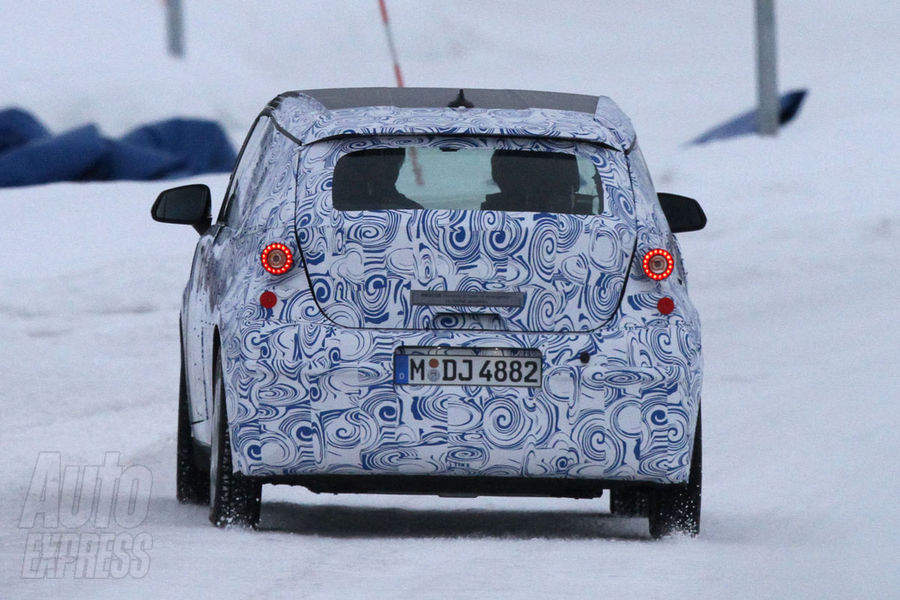
It seems that ever since the spy shots were captured, the illustrations are able to really capture the cars general lines. I'm still a little concerned about the apparent bump in the short stubby nose, but this illustration makes it look OK. I trust the BMW designers will make the i3 look good. However the spy shots with all the camouflage don't leave an image of a great looking vehicle. I know that BMW probably has deliberately modified the body a bit under the swirly white & blue body cover so you really can't believe everything you see until the car is officially revealed. Rumor has it that BMW will show a pre production version of the i3 for the first time at the 2011 Frankfurt Auto Show in September.

Monday, April 11, 2011

BMW Hires Frank Weber, Former Lead Engineer for the Chevy Volt

In a move that further solidifies BMW's commitment to electric cars, they have just hires Frank Weber, former head engineer for the Chevy Volt. Frank will report to Klaus Draeger, BMW's head of R&D

This move is a little surprising because in the past, BMW has rarely hired top people from other auto makers, electing instead to train and promote from within. In my opinion, this is an example of how important BMW feels it is to accelerate their electric car line and not fall behind in the race to bring a wide range of electric cars and plug in hybrids to their showrooms.

What I find particularly interesting is that there have been a lot of rumors around that BMW will be offering a range extender for the i3 shortly after the original BEV version is released in 2013. I'm hearing a lot of talk about a three cylinder, turbo charged engine as being the suspected powerplant for such a set up. This would make the i3 very similar to the Volt so in that regard Mr. Weber's experience can make an immediate impact on the development of the i3.

Saturday, March 26, 2011

BMW i3: Light Weight Means Less Energy Storage Needed

The Power Electronics & Battery System of the i3's Drive System

The previous post here showed a video about CFRP, the material that will be used in the "Life Cell" of the 2013 BMW i3. The picture above is part of the other component of the cars unique LifeDrive architecture, the drive system. This is the energy storage and power electronics the car will employ. Suprisingly, it may only use a 16 kWh battery pack, exactly half the size of the pack in the upcoming BMW ActiveE, yet give the vehicle roughly the same range of the larger, heavier and less efficient ActiveE. However it is possible that the 16 kWh is the "usable" amount of energy which would mean the pack would be around 20 kWh. BMW hasn't announced the actual size, so this is really speculation at this point.

To put that accomplishment in even better perspective, the battery is only about 45% of the size of the battery pack currently in the MINI-E's yet the car is bigger, has two more seats, much more storage space and is expected to offer the same driving range.


The batteries used will be the same that are in the BMW ActiveE, which will launch as a trial lease program this fall. They are newly developed Lithium-ion cells which will be using a nickel-manganese-cobalt chemistry made by SB-Limotive. SB-Limotive is a joint venture of Korean conglomerate Samsung and German parts giant Bosch. The ActiveE will use 192 cells in 25 modules in three separate battery blocks as opposed the the picture above where the i3's batteries are all located in one enclosure, a result of the car being a purpose-built EV and not a retrofitted ICE platform like the ActiveE. It's been rumored the i3 may use only 96 cells, in 48 smaller modules(only 2 cells per module) packed in rows under the Life Cell driving compartment and be thermally conditioned.

The end result means two main things. The battery is usually the most expensive part of an EV, and since the battery pack will be half the size of the ActiveE, it will cost significantly less to manufacturer, helping to keep the selling price of the i3 to a reasonable point. Secondly, less batteries means less weight and helps to further increase efficiency.


Complete Battery & Drive System of the 2013 BMW i3
Of course, none of this information has been "officially" released by BMW so it is speculation on my part. However, since it has been "reported" and "rumored" by many different media outlets I think it's safe to assume it is mostly accurate. The only question I have is whether the 16 kWh is the total pack or the usable amount which is usually about 80% of the packs total energy storage capacity.

Wednesday, March 23, 2011

BMW i3 & CFRP, Perfect Together


One of the main goals BMW had with the development of the Megacity car now known as the i3, was to reduce the weight as much as possible while providing a strong, safe passenger cell. The extensive use of carbon fiber reinforced plastics or CFRP, has allowed them to do just that. While the use of CFRP isn't a new idea in the automotive industry, using it as extensively as BMW is on the i3 is groundbreaking. It's been written that by using CFRP as extensively as they are, it has cut the weight of the vehicle by as much as 700lbs. This will allow BMW to use less of the expensive batteries and still hit their target 100 mile range. That will also reduce cost and further reduce weight since the batteries are also heavy. The above video talks about how BMW is using CFRP and references the i3 a couple times.

Tuesday, March 22, 2011

BMW Website now has i3 Information


BMW now has an i3 section on their website. While it doesn't have any new information that hasn't been available here and on the internet for a while now, at least they have begun to post information about it. While it's still over two years away from production, there are a lot of people following it and waiting for every bit of information as it's released.

Tuesday, March 8, 2011

First Spy Images of the i3 Surface!


For over a year now BMW has been talking about the 2013 "Megacity" vehicle. It will be the first all electric BMW sold ever. Since it was first announced, we have never actually seen a picture or a clear rendering of what the car will look like, just vague sketches until now. The photos to the left show the actual i3(albeit in camouflage) during cold weather testing.

A couple things that stand out immediately are the circular tail lights that extend out from the car. They look cool but I do wonder if they will be prone to breakage. Also note the tall, thin tires. I have heard about these but had not seen any pictures or drawings before these photos. Evidentlly, BMW has been working on a special tire that has very low rolling resistance for the i3. This cars main purpose is to be efficient, and the rolling resistance of tires play a bigger role than you might expect. For example, when BMW puts the winter snow tires on my MINI-E, I immediately see a reduction in range of about 3%. Now if they could design a tire that alone increases the range by 5 to 8%, think of how that helps the overall efficiency of the car. Hopefully this wheel/tire combo will not sacrifice much handling or ride comfort though, because after all, it still needs to feel like a BMW.